
Technology
Two methods, two different jobs. Extraction separates from the plant; distillation fractionates the extract. Which one, in which order and with which settings depends on the target compound.
- Document
- pc·t·01
- Revision
- 2026.10
- Status
- Published
01Added value
From any plant to added value.
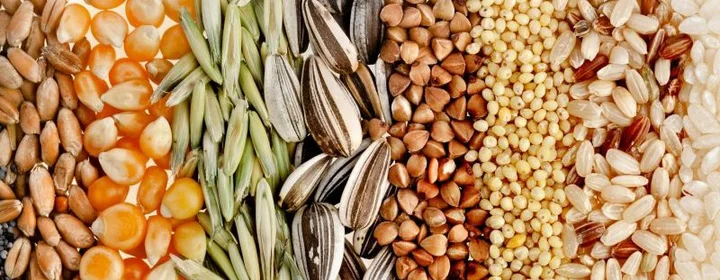
Supercritical CO2 extraction is one of the strongest ways to obtain high-yield, high-quality extracts free of organic solvents from almost any plant. The value created when those compounds are used in food, cosmetic, pharmaceutical and similar formulations has a name: added value.
- 01
Agent
Carbon dioxide (CO2) is used as the extraction agent (other agents exist too). No separate organic solvent is needed; when pressure is released, CO2 turns back into gas and leaves the product. Extraction means separating a wanted compound from a material.
- 02
Selectivity
Dissolving power differs with pressure and temperature; the process is built around what needs to be dissolved. The target active compounds of the plant are separated close to their natural form, without breaking their molecular structure.
- 03
Recovery
In every system the CO2 used is recovered. Solvent cost drops as far as it can; systems of thousands of litres can run again and again on the same CO2.
- 04
Sustainability
With its yield and quality it enables sustainable, innovative products. CO2 recovery and energy use are measured and reported for production in line with green deal goals.
- 05
Process engineering
Process engineering is really about knowing what you produce and how each thing should be produced. We define clearly what can be obtained from a raw material by upcycling (active compound, extract, plant protein, peptide, fibre) and where each should be used.
- 06
Enzyme inactivation
Supercritical CO2 is not only for making extracts; by inactivating enzymes it also plays an important role in extending the shelf life of foods.
- 07
Functional food
When developing a functional food, the dose of the chosen active compound (caffeine, for example) and the food that carries it are decisive; the extract's profile is built around that decision.
02Comparison
Two methods in one table.
03Supercritical CO₂
Supercritical extraction: conventional process designs.
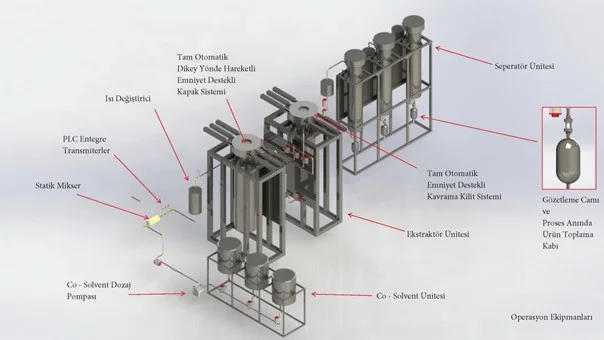
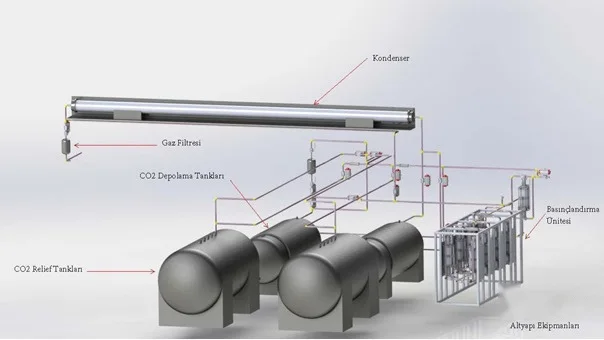
Conventional process designs · extractor volume
- 100 lt – 150 lt
- 200 lt – 300 lt
- 500 lt – 1,000 lt
- 5,000 lt
04Technical specifications
Four models from R&D to production, seven units.
| Unit | Specification | 5 ltR&D | 50 ltProduction | 100 ltProduction | 500 ltProduction |
|---|---|---|---|---|---|
| 01Extractor | Useful volume × units | 5 lt × 1 | 25 lt × 2 | 50 lt × 2 | 250 lt × 2 |
| Max. Operating pressure | 500 bar | 400 bar | 400 bar | 400 bar | |
| 02Separator | Useful volume × units | 2.5 lt × 3 | 15 lt × 3 | 25 lt × 3 | 150 lt × 3 |
| Max. Operating pressure | 500 – 350 – 250 bar | 400 – 250 – 150 bar | 400 – 250 – 150 bar | 400 – 250 – 150 bar | |
| 03Pressurisation unit (booster) | CO2 flow | 1 lt/min | 5 lt/min | 10 lt/min | 50 lt/min |
| 04Heating unit | Total heating capacity | 5 kw | 20 kw | 40 kw | 100 kw |
| Oil reserve | 50 lt | 150 lt | 250 lt | 500 lt | |
| 05Cooling unit | Chiller | 5,000 kcal/h · 0 °C | 20,000 kcal/h · 0 °C | 40,000 kcal/h · 0 °C | 100,000 kcal/h · 0 °C |
| 06Co-solvent unit | Pump | 5 kg/h · 500 bar | 25 kg/h · 400 bar | 50 kg/h · 400 bar | 100 kg/h · 400 bar |
| Tank | 10 lt | 50 lt | 100 lt | 250 lt | |
| 07Automation | Temperature | Transmitter | Transmitter | Transmitter | Transmitter |
| Pressure | Transmitter / manometer | Transmitter / manometer | Transmitter / manometer | Transmitter / manometer | |
| PLC control panel | 15 inch touch panel | 15 inch touch panel | 15 inch touch panel | 15 inch touch panel | |
| Recipes | Unlimited | Unlimited | Unlimited | Unlimited | |
| Data logging | Yes | Yes | Yes | Yes |
Capacity and equipment may vary by project; exact values are given in the quote.
05Additional information
From material to delivery.
- 01
In every model, whatever its capacity, the maximum operating temperature is +80 °C; the material is 1.4410 / 1.4417 super duplex or SS316 stainless steel.
- 02
Heating units are electric resistance heaters; the circulating fluid is thermal transfer oil. The pressurisation units (booster) use a pneumatic or hydraulic liquid gas pump.
- 03
Extracts are made to meet the criteria of the European Pharmacopoeia and the European cosmetic regulations; every batch is confirmed by an analysis report.
- 04
Raw material quality is the single most important factor in extract quality.
- 05
The outputs of the process are pure extracts; they can be diluted with different carriers, applied and formulated.
- 06
After a product run, the system is cleaned easily with water or ethanol in a closed, pressurised loop, so production can move to a different product without difficulty.
- 07
Molecular distillation (thin film evaporator) equipment is recommended with the system: the volatile compounds of the extract are separated into a useful raw material, and the remaining oleoresin or active-rich fraction becomes a raw material of its own.
- 08
Especially in selective extraction work, a co-solvent used in the process is then removed from the extract by molecular distillation. Working at low temperature under high vacuum, the system prevents oxidation of the extract and its active compounds.
- 09
All installation, on-site commissioning, technical support and product optimisation work is provided by us without additional charges.
- 10
Delivery takes 180 working days (60 days for the 5 lt R&D version); assembly and commissioning take 45 working days (1 day for the R&D version). Delivery is to the customer's address.
06Molecular distillation
Molecular distillation: conventional process designs.
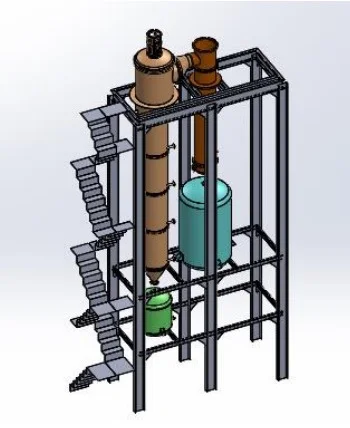
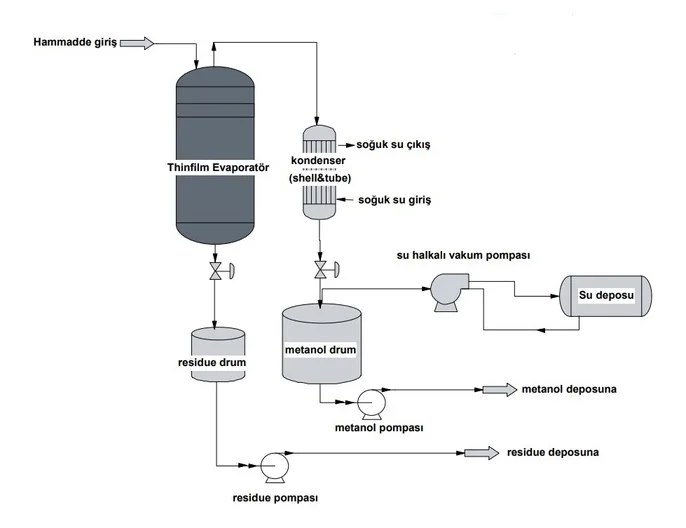
Conventional process designs · evaporation surface
- 0.25 m² – 1 m²
- 2.5 m² – 5 m²
- 10 m²
An advanced technology that concentrates a feed liquid very quickly at very low temperatures under high vacuum, while keeping several other parameters under control.
07Installation and consulting
We install the system and grow production together.
We consult on installing supercritical CO2 extraction and molecular distillation systems and on producing with them. From what to make out of which raw material to the scale of the plant, from installation to the first batch, we work alongside investors, entrepreneurs and institutions.
We develop new business and new products for the people and institutions who ask: to turn a side stream into a raw material, a raw material into a value-added product, and a product into a sustainable business.
Together with our solution partners we have set out to leave lasting work behind and to be useful to people with high-technology products. Success is the name of a systematic process: the right teams coming together, teamwork run in coordination, and goals, time, people, situations and finance managed in step.
Let’s talk about your projectEnd-to-end support
- Production
- Technical support
- Training
- Planning
- Organisation
- Management
- Sales
- Spare parts
- Financial planning
Every lock has its key: scope, scale and schedule are set out per project in the quote.
08Modules
A page for each method.
- aSupercritical CO2 extractionPrinciple, settings, the facility flow diagram and the system family; the method behind all our products
- bMolecular distillationShort path, thin film, the balance of purity and yield; per project
- cFacility and laboratoryPhotographs of the line and the analysis parameters on the sheet
- dCycle and sustainabilityFive products from tomato skin; measurement plan
- eChoosing a methodWhich method for which goal; information note
09Flow
Five steps, five records.
- 01
Source
Plant, part, origin and harvest are recorded. The same name can give a different profile from a different source.
OutputRaw material record
- 02
Separation
Supercritical CO2 extraction separates target compounds from the plant material.
OutputProcess record
- 03
Refinement
Where needed, molecular distillation fractionates the extract towards a target profile.
OutputProcess record
- 04
Analysis
The batch is measured with defined methods. The result documents the batch, not the product in general.
OutputCoA
- 05
Application
The ingredient is assessed again in the customer's product and regulatory context.
OutputTDS · SDS